上映:
1948-11-19
更新:
2023-10-25 16:40:17,最后更新于
2年前
备注:
已完结
TAG:
未知
剧情:
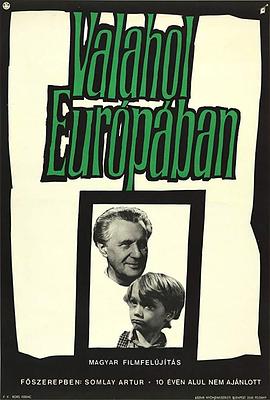
Somewhere in the remote region, the war ends. In the midst of ruined cities and houses in the streets, in rural hamlets, everywhere where people still live, are children who have lost their homes and parents. Abandoned, hungry, and in rags, defenseless and humiliated, they wander through the world. Hunger drives them. Little streams of orphans merge into a river which rushes forward and submerges everything in its path. The children do not know any feeling; they know only the world of their enemies. They fight, steal, struggle for a mouthful of food, and violence is merely a means to get it. A gang led by Cahoun finds a refuge in an abandoned castle and encounters an old composer who has voluntarily retired into solitude from a world of hatred, treason, and crime. How can they find a common ground, how can they become mutual friends The castle becomes their hiding place but possibly it will also be their first home which they may organize and must defend. But even for this, the price will be very high. To this simple story, the journalist, writer, poet, scriptwriter, movie director, and film theoretician Béla Balázs applied many years of experience. He and the director Géza Radványi created a work which opened a new postwar chapter in Hungarian film. Surprisingly, this film has not lost any of its impact over the years, especially on a profound philosophical level. That is to say, it is not merely a movie about war; it is not important in what location and in what period of time it takes place. It is a story outside of time about the joyless fate of children who pay dearly for the cruel war games of adults. At the time it was premiered, the movie was enthusiastically received by the critics. The main roles were taken by streetwise boys of a children's group who created their roles improvisationally in close contact with a few professional actors, and in the children's acting their own fresh experience of war's turmoil appears to be reflected. At the same time, their performance fits admirably into the mosaic of a very complex movie language. Balázs's influence revealed itself, above all, in the introductory sequences an air raid on an amusement park, seen in a montage of dramatic situations evoking the last spasms of war, where, undoubtedly, we discern the influence of classical Soviet cinematography. Shooting, the boy's escape, the locomotive's wheels, the shadows of soldiers with submachine guns, the sound of a whistle—the images are linked together in abrupt sequences in which varying shots and expressive sharp sounds are emphasized. A perfectly planned screenplay avoided all elements of sentimentality, time-worn stereotypes of wronged children, romanticism and cheap simplification. The authors succeeded in bridging the perilous dramatic abyss of the metamorphosis of a children's community. Their telling of the story (the scene of pillaging, the assault on the castle, etc) independently introduced some neorealist elements which, at that time, were being propagated in Italy by De Sica, Rossellini, and other film artists. The rebukes of contemporary critics, who called attention to formalism for its own sake have been forgotten. The masterly art of cameraman Barnabás Hegyi gives vitality to the poetic images. His angle shots of the children, his composition of scenes in the castle interior, are a living document of the times, and underline the atmosphere and the characters of the protagonists. The success of the picture was also enhanced by the musical art of composer Dénes Buday who, in tense situations, inserted the theme of the Marseilaise into the movie's structure, as a motive of community unification, as an expression of friendship and the possibility of understanding. Valahol Europaban is the first significant postwar Hungarian film. It originated in a relaxed atmosphere, replete with joy and euphoria, and it includes these elements in order to demonstrate the strength of humanism, tolerance, and friendship. It represents a general condemnation of war anywhere in the world, in any form.
收起
相关影片


2022
电影
日本,法国,韩国
HD

2020
电影
美国
已完结

2022
电影
日本
HD

2013
电影
法国 比利时 西班牙
已完结

2015
电影
大陆
已完结
2023
电影
美国
HD
![孤狼之血 孤狼の血[电影解说]](/upload/vod/20240118-1/ac449a10e6ebd6c56f7819ba9deae16a.jpg)
2018
电影
日本
电影解说
![好朋友们 좋은 친구들[电影解说]](/upload/vod/20240118-1/47f2f6c388d16a90b56940a60005fbc7.jpg)
2014
电影
韩国
电影解说
![好想告诉你 君に届け[电影解说]](/upload/vod/20240118-1/a862d0851fc7d0427ad75ce6b7bc3f80.jpg)
2010
电影
日本
电影解说
![夺命剑 上意討ち 拝領妻始末[电影解说]](/upload/vod/20240118-1/0063161e61fc88b7e4412a81df393e71.jpg)
1967
电影
日本
电影解说
![东方的承诺[电影解说]](/upload/vod/20240118-1/b8d7cd3e6e5c14ea53b0c6ddbbe2fd77.jpg)
2007
电影
英国
圣诞节,一个14岁的俄罗斯少女因难产而死在伦敦一家医院,俄裔助产士安娜(娜奥米·沃茨 饰)觉得事有蹊跷,暗中调查少女的来历,却发现少女不但是一个偷渡客,而且还是深陷性交易的雏妓。安娜在叔叔的指点下找
电影解说
![行动目标希特勒 Valkyrie[电影解说]](/upload/vod/20240117-2/b3596bb61badcafc393a9b1a82a9f20d.jpg)
2008
电影
美国 德国
电影解说
![行骗天下JP:公主篇 コンフィデンスマンJP プリンセス編[电影解说]](/upload/vod/20240117-2/cc476a3b10f06458cdd5cae852266d35.jpg)
2020
电影
日本
电影解说

2022
电影
瑞士
HD
![一个好爸爸[电影解说]](/upload/vod/20240117-2/8e7753c2763907b8e8f2ef339d822be1.jpg)
2008
电影
香港
李天恩(古天乐 饰)少年时代便喜欢打架,后来成为了江湖老大,他与母亲恩妈(苗可秀 饰)互相斗嘴,是他们一贯的相处方式。陈美宝(刘若英 饰)与李天恩在警察局一见钟情,即使两人背景相差甚异,两人还是相爱
电影解说
正在热播
更多
2023
电视剧
大陆
独家推荐
魔种白擎天之子,在圣玄宗弟子入门考核时觉醒无限顿悟系统,靠着故意引人嫉妒获得的顿悟机会,展现出逆天的天赋,但因为叛徒之子的身份,最后被上代圣子收为弟子。为获得顿悟机会,白墨总是故意和嫉恨自己的人行走一
更新至39集

2021
电视剧
大陆
独家推荐
更新至83集

2023
电视剧
中国大陆
独家推荐
更新至02集

2023
电视剧
大陆
独家推荐
来到玄幻世界,化身终极大反派,恶人谷掌门兼无数恶人的大师兄柳乘风了该怎么办!在线等,挺急的。看着自己的善人系统,身为新世纪好青年的柳乘风坚定地一步步完成系统任务获得奖励,同时用高大上的三观改变自己的师
更新至14集

2023
电视剧
大陆
独家推荐
;妖灵 ;,最初只是出现在小范围的灵异事件中,有无害的善灵,也有危险的恶灵。一百年前,恶灵突然大量增长,肆意屠杀人类。人类数量锐减,挣扎求生,直到拥有妖气潜力,能够操纵 ;妖
更新至57集

2023
电视剧
中国大陆
独家推荐
更新至16集

2020
电视剧
大陆
独家推荐
更新至317集


2023
电视剧
中国大陆
独家推荐
更新至17集

2021
电视剧
大陆
推荐
更新至20231025期


2023
电视剧
中国大陆
推荐
更新至20231025期

2023
电视剧
日本
推荐
主角廻是一名广告公司的艺术总监,她被后辈仰慕,非常擅长让工作严丝合缝地顺利进行。但是在恋爱上,总是不敢跨越“那条线”,经常一个人喝闷酒流泪。“想要谈恋爱…”,抱着这样想法的廻遇到了来自未来的时光巡逻队
更新至03集

2023
电视剧
日本
独家推荐
更新至02集